
AIA Home Tours Featuring a Church to Condo Conversion
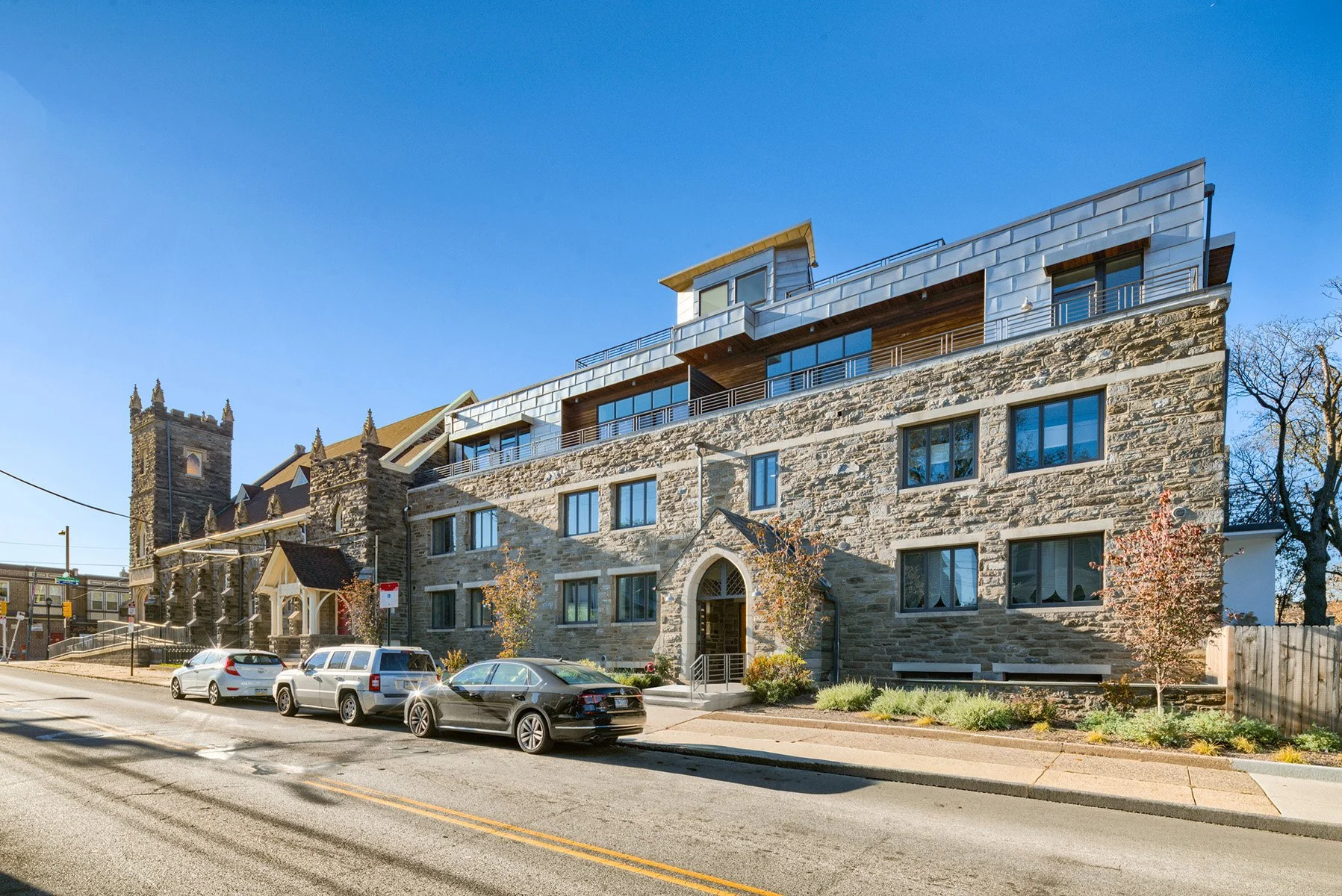
Mt. Pleasant entrance of 7111 Germantown Ave Condominiums. Photograph by Don Pearse.
Inside the Transformation of a Historic Mt. Airy Church
As part of this year’s AIA Home Tours hosted by AIA Philadelphia, 7111 Germantown Avenue welcomed visitors into a historic church complex first built in 1905, offering a rare opportunity to see how adaptive reuse can carry a beloved neighborhood landmark into a new era of residential life. Located in the heart of Mt. Airy’s Central Commercial Historic District, the former Mt. Airy Presbyterian Church grew alongside its community for more than a century, expanding in 1956 with a Christian Education Building that introduced classrooms, a cafeteria, gymnasium, and auditorium stage. Now reimagined as a collection of contemporary condominium residences, the project preserves the architectural memory and civic presence of the original structure while giving the century-old complex a new identity as home.
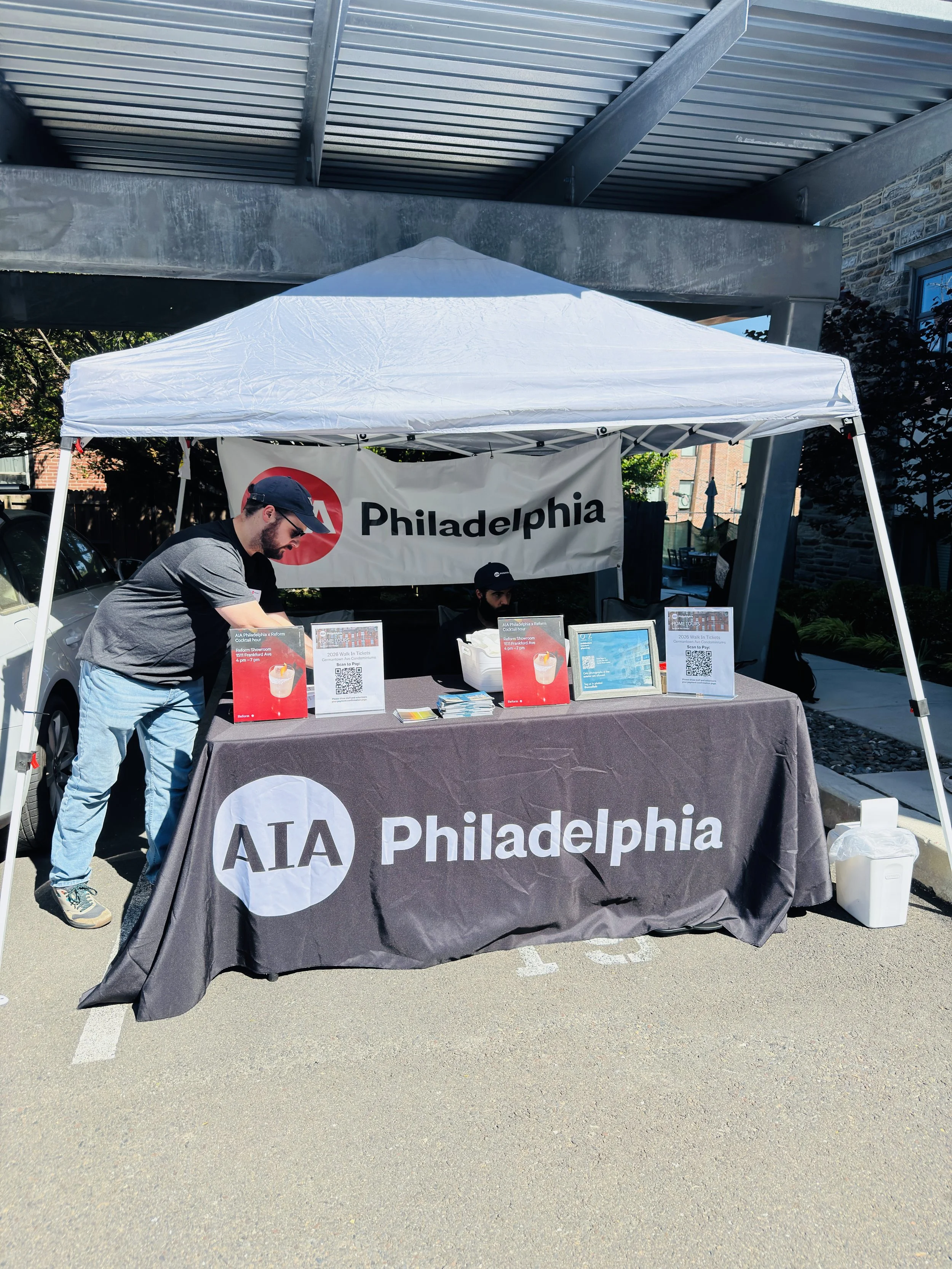
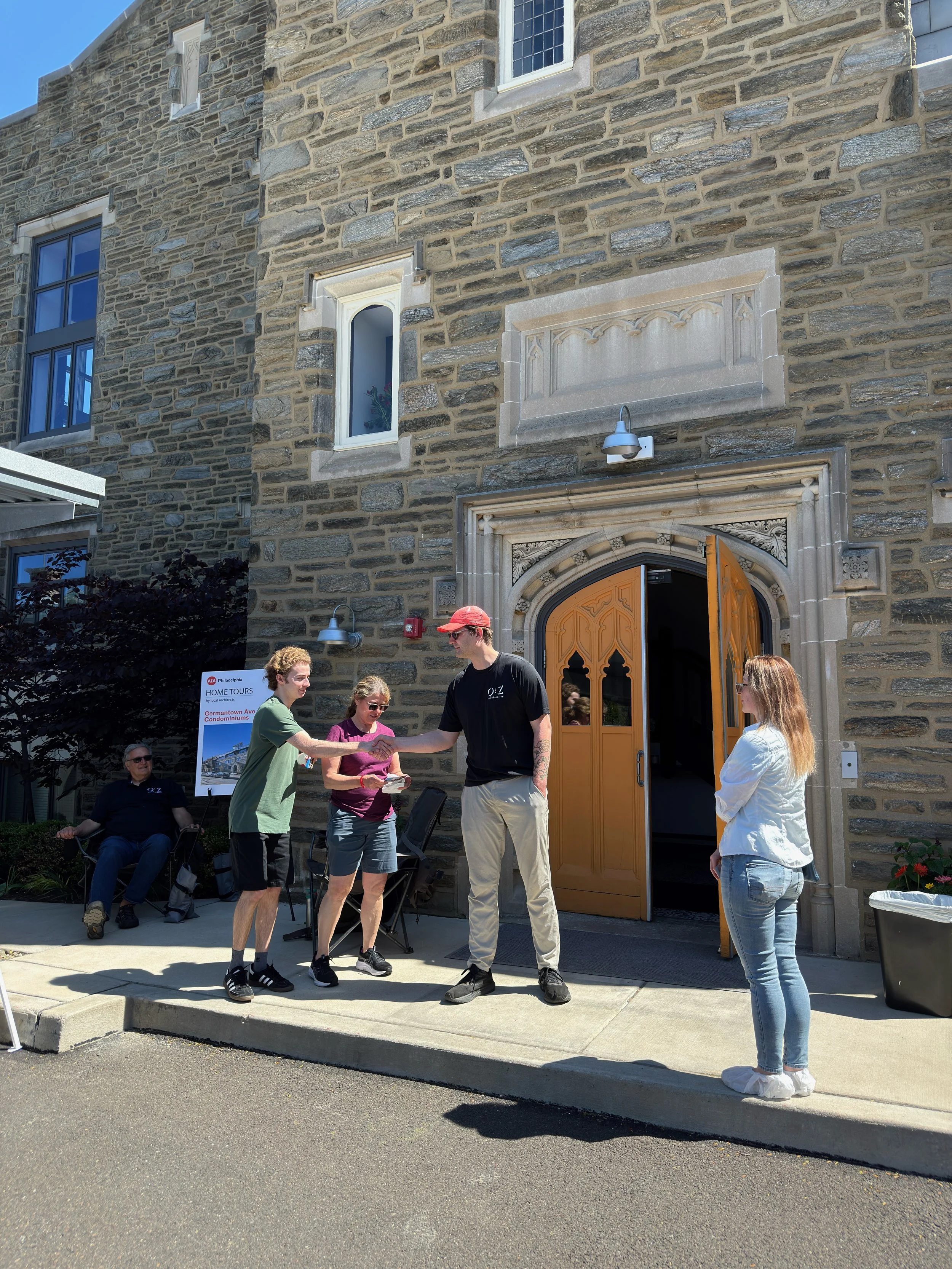
On Saturday, May 16th, more than 150 attendees gathered to tour three residential units varying in scale, layout, and architectural identity. The event provided visitors with a firsthand look at how historic religious architecture can be reimagined to support contemporary urban living while preserving the craftsmanship and spatial qualities of the original building.
Like many urban congregations, the church faced declining membership and the growing financial burden of maintaining a large historic structure that far exceeded its operational needs. Rather than let the century-old church fall silent or be lost to demolition, the congregation chose to breathe new life into the historic structure, preserving its identity while reimagining it as a collection of residences where a new community of owners could call home.
Working closely with developers Philly Office Retail and Bancroft Green, O Z Collaborative reimagined the underutilized portions of the former church complex into nineteen condominium residences, giving new purpose to spaces layered with more than a century of history. Rather than treating the existing building as a constraint, the design team approached it as a framework for renewal, balancing preservation, accessibility, and contemporary residential needs with a deep respect for the structure’s original character.
Within the building, the process of transformation also became one of rediscovery. Original stone walls, exposed timber trusses, and unique architectural elements hidden behind earlier renovations were uncovered and carefully woven into the new residences. These preserved details bring texture, memory, and permanence to open modern layouts, allowing the past to remain legible within the rhythm of daily living. Four new penthouse residences were added above the existing structure, thoughtfully scaled to respect the building’s historic massing while opening new views toward the surrounding Mt. Airy neighborhood.
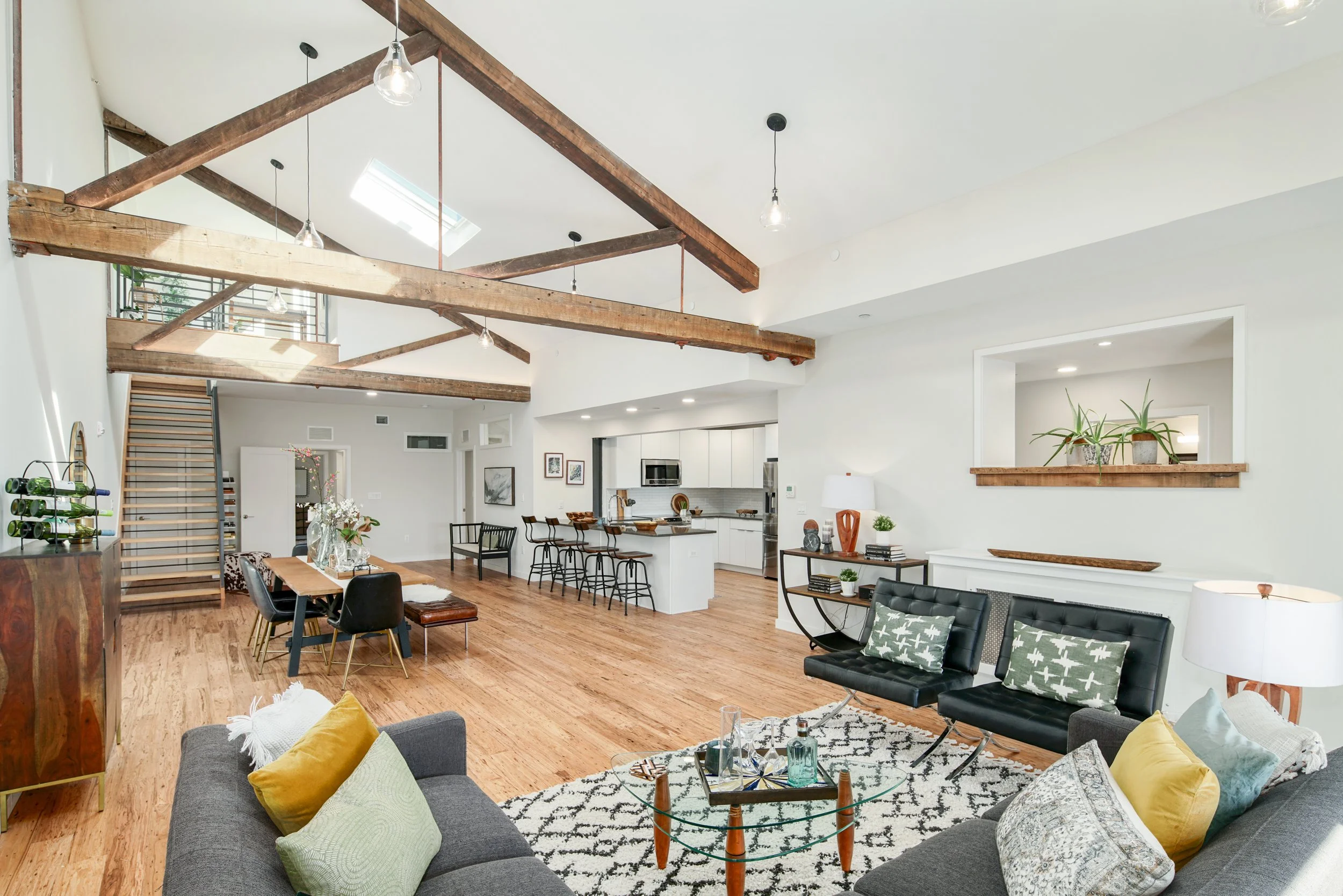
Interior View of Unit 404 : Photograph by Don Pearse.
One of the project’s most complex design challenges was navigating accessibility within a structure composed of twelve distinct floor levels. Through careful planning and the introduction of a full-service elevator, sixteen of the nineteen residences were made accessible, allowing the historic building to accommodate contemporary standards of use without compromising its layered architectural character.
The design also prioritized moments of private openness within the dense historic fabric. Each residence was provided with a distinct connection to the outdoors, through decks, balconies, patios, sunrooms, or private roof access. The new rooftop addition above the former church annex created greater flexibility within the residential layouts, allowing for larger floor plans, expanded balconies, increased daylight through larger windows, and opportunities to reveal and celebrate original structural elements from the church complex.
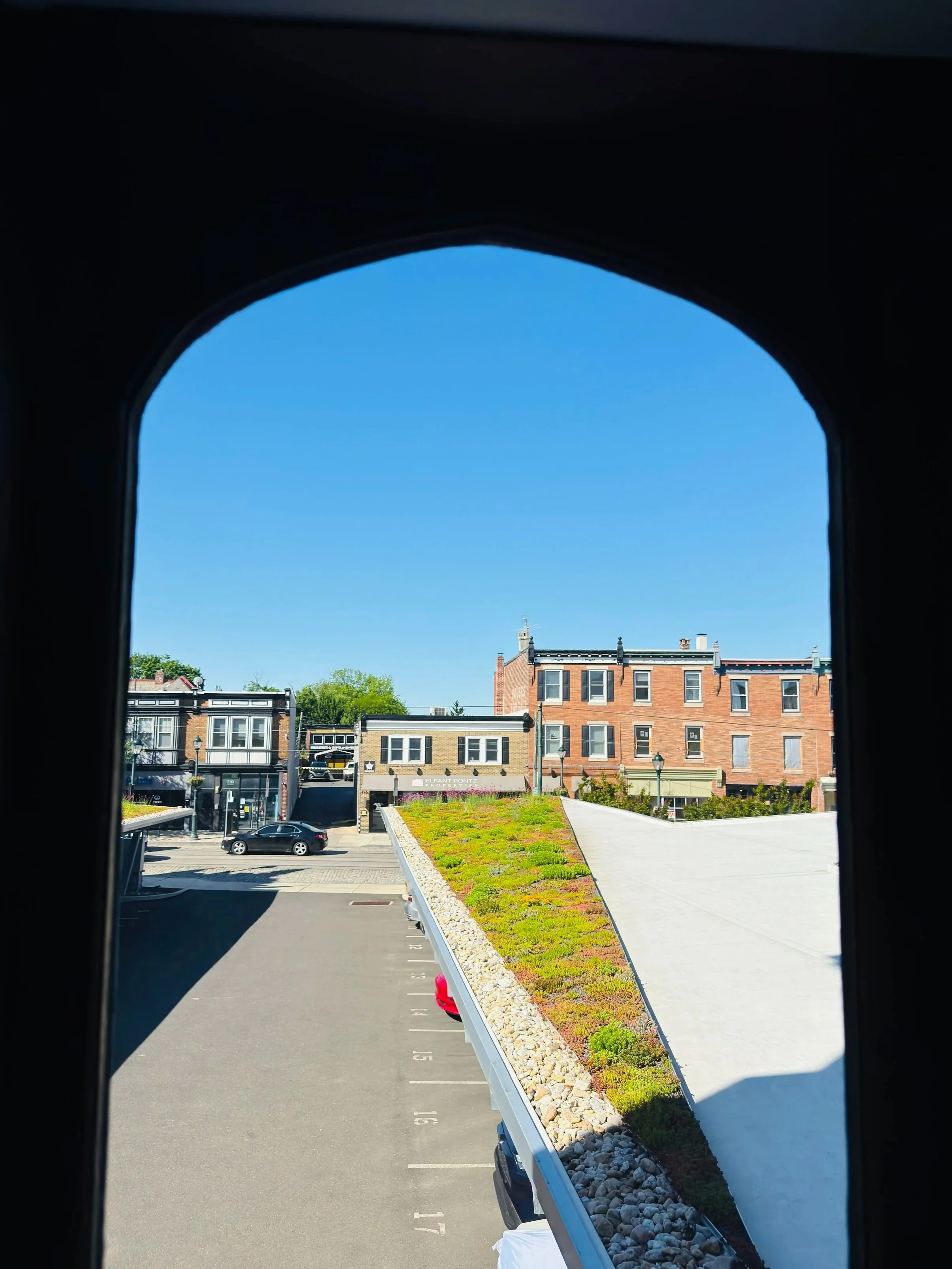
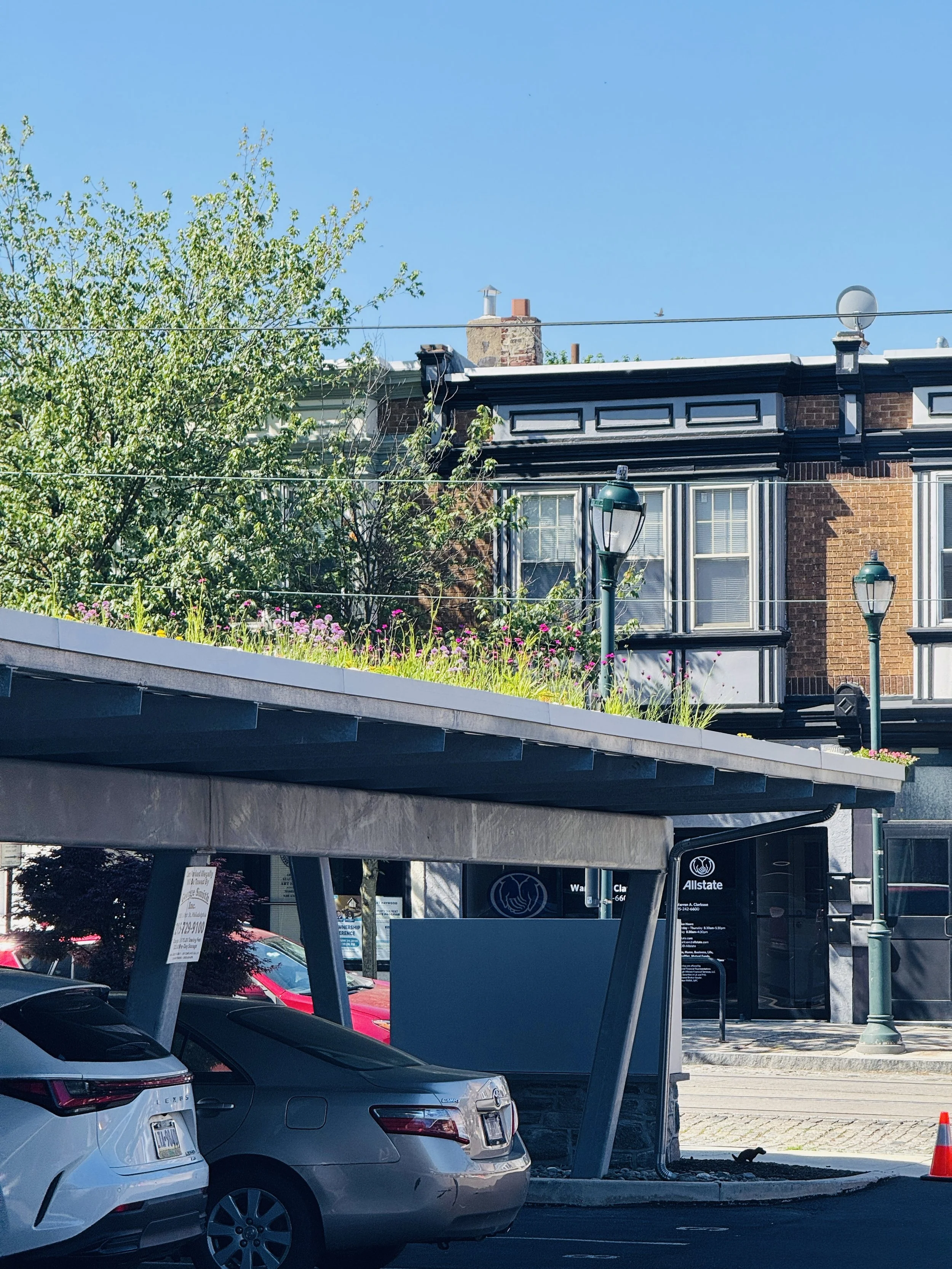
Sustainability was integrated through both preservation and new construction strategies, including a green-roofed carport that contributed to the project’s pursuit of ENERGY STAR Multifamily standards. Together, these interventions allow the building to evolve with purpose, preserving its civic presence along Germantown Avenue while introducing a new residential life within its historic walls.
The project also marks the next chapter in the ongoing transformation of the former church complex. O Z Collaborative is currently working with The Lantern Theater Company to reimagine and redesign the sanctuary as a future theater, extending the life of the original church as a place for culture, performance, and shared experience.
Rather than treating the building as a fixed artifact, the project embraces it as a living structure, one capable of adaptation, memory, and renewed purpose. Through preservation, careful intervention, and continued collaboration, 7111 Germantown Avenue offers a model for how historic religious buildings can be reimagined for contemporary urban life while retaining the presence and meaning they have long held within their neighborhoods.
Click here to learn more about 7111 Germantown Avenue.