
Celebrating One Year of Old First House

Exterior of Old First House located in Old City.
A Legacy of Service Reimagined
One year after completion, Old First House stands as a compelling example of how historic preservation, sustainable design, and supportive housing can work together to address housing insecurity in Philadelphia. Located in the heart of Old City, the project builds on the long-standing mission of the Old First Reformed United Church of Christ, which has served the community continuously since its founding in 1727. For decades, the congregation has provided winter shelter since 1984 and operated weekly meal and clothing programs. As the need for permanent housing solutions became increasingly urgent, the church identified an underutilized portion of its property as an opportunity to extend its mission beyond temporary relief.
Community Ventures, acting as developer, advanced a vision for permanent supportive housing that would integrate residential, community, and congregational uses while responding to the constraints of a historically protected site. The project required careful coordination with the Pennsylvania Housing Finance Agency and sensitivity to the surrounding Old City Historic District.
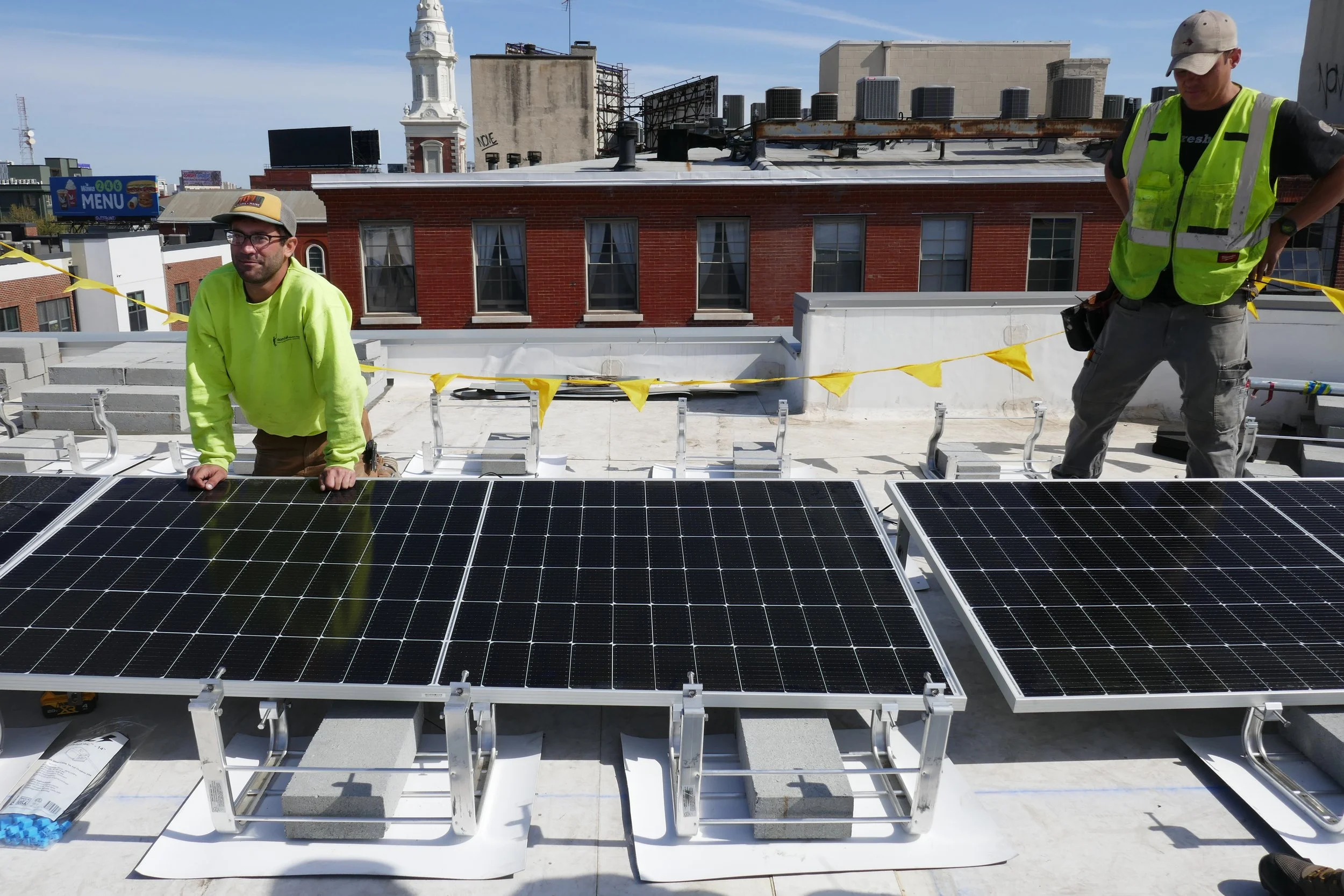
Solar panels installed on the rooftop of Old First House.
Preserving History While Enabling Growth
O Z Collaborative was engaged to design a five-story, mixed-use building that provides 34 efficiency apartments for formerly homeless individuals. The design incorporates shared kitchen and dining amenities to support community living, along with church offices, classrooms, and a ground-floor commercial space that activates the street corner and contributes to neighborhood vitality.
The architectural response is grounded in both performance and context. The building was designed to meet Passive House standards, significantly improving energy efficiency, indoor air quality, and long-term operational stability. At the same time, the massing and material expression reestablish density consistent with the district’s period of significance while maintaining a respectful relationship to the adjacent historic church.
A defining intervention involved the relocation of an 18th-century rowhouse. Rather than removing the structure, it was carefully moved south to align with neighboring buildings, preserving the continuity of the streetscape and reinforcing the historic urban fabric. Landscaped open spaces now mediate between old and new, creating shared outdoor areas for residents and congregants.
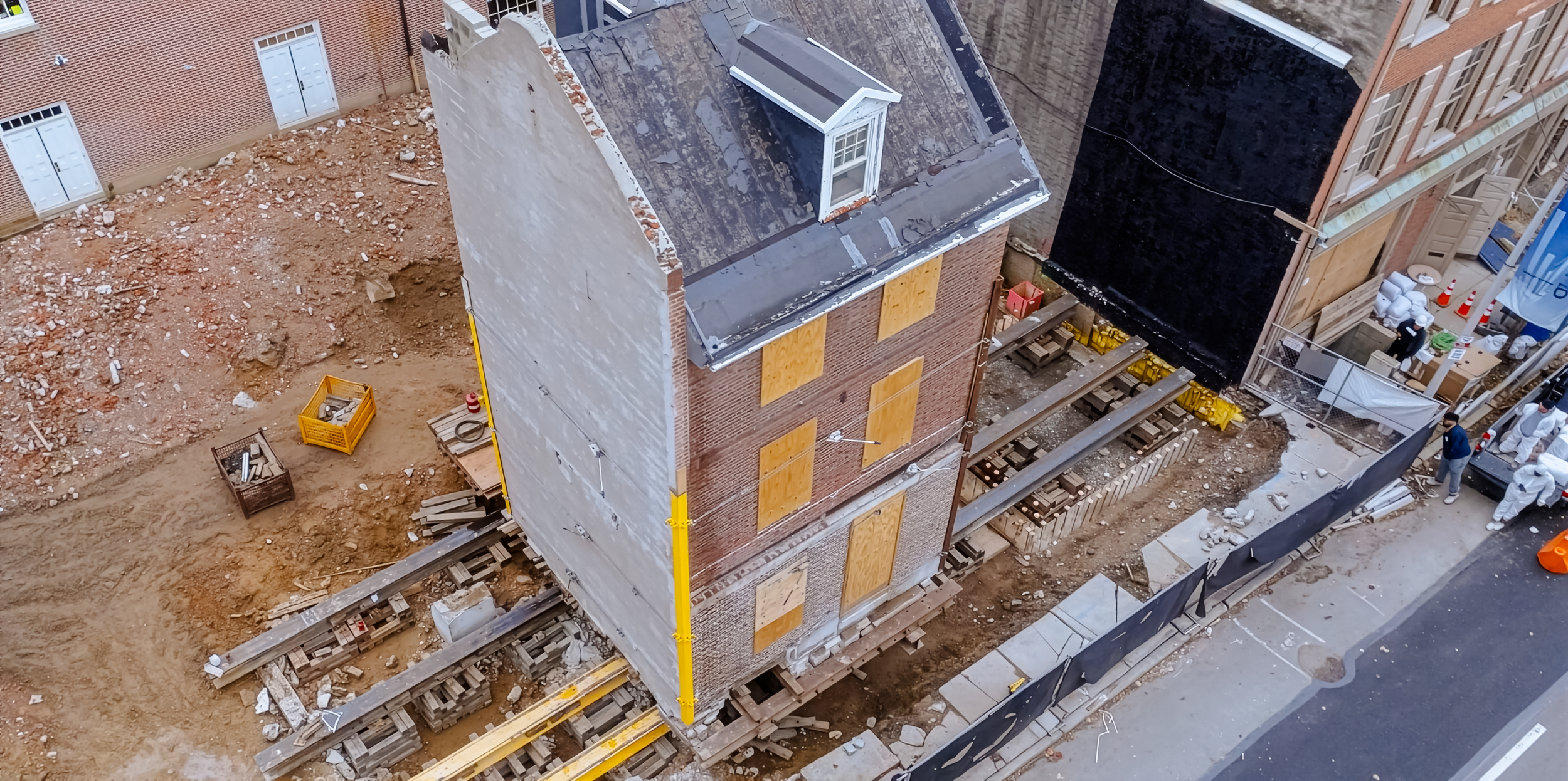
Historic preservation in motion: a circa 1760 rowhouse is carefully relocated by Domus, moving 48 feet to maintain the integrity of the Old City streetscape while making way for new supportive housing at Old First House.
The project transforms a legacy of temporary shelter into a permanent housing solution. It reinforces the church’s role as a community steward while introducing sustainable, supportive housing that contributes to the long-term stability and vitality of the neighborhood.
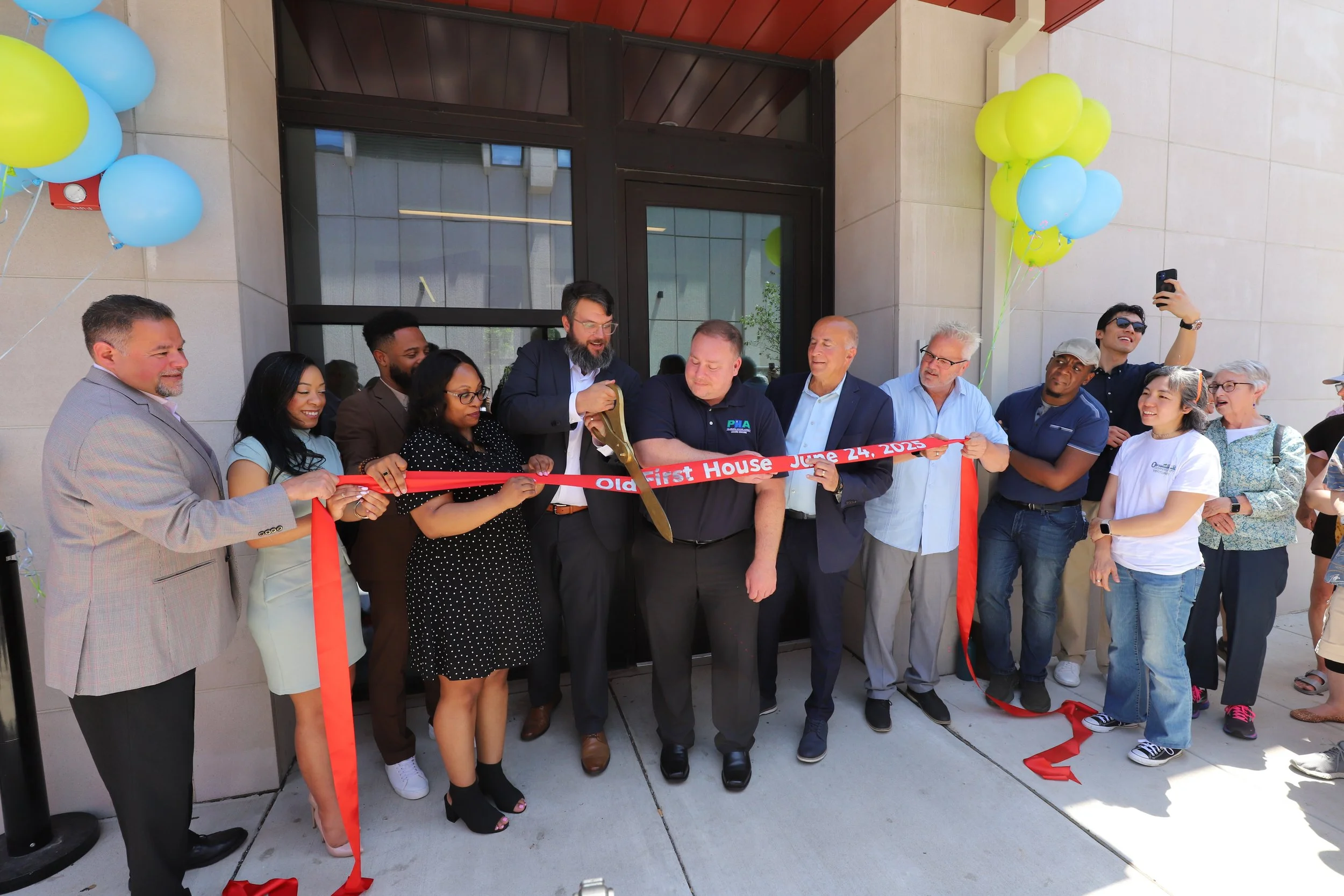
Ribbon Cutting Ceremony at Old First House.
Click here to read more about Old First House.