
Black Architects in Philadelphia Who Shaped the City’s Civic Identity
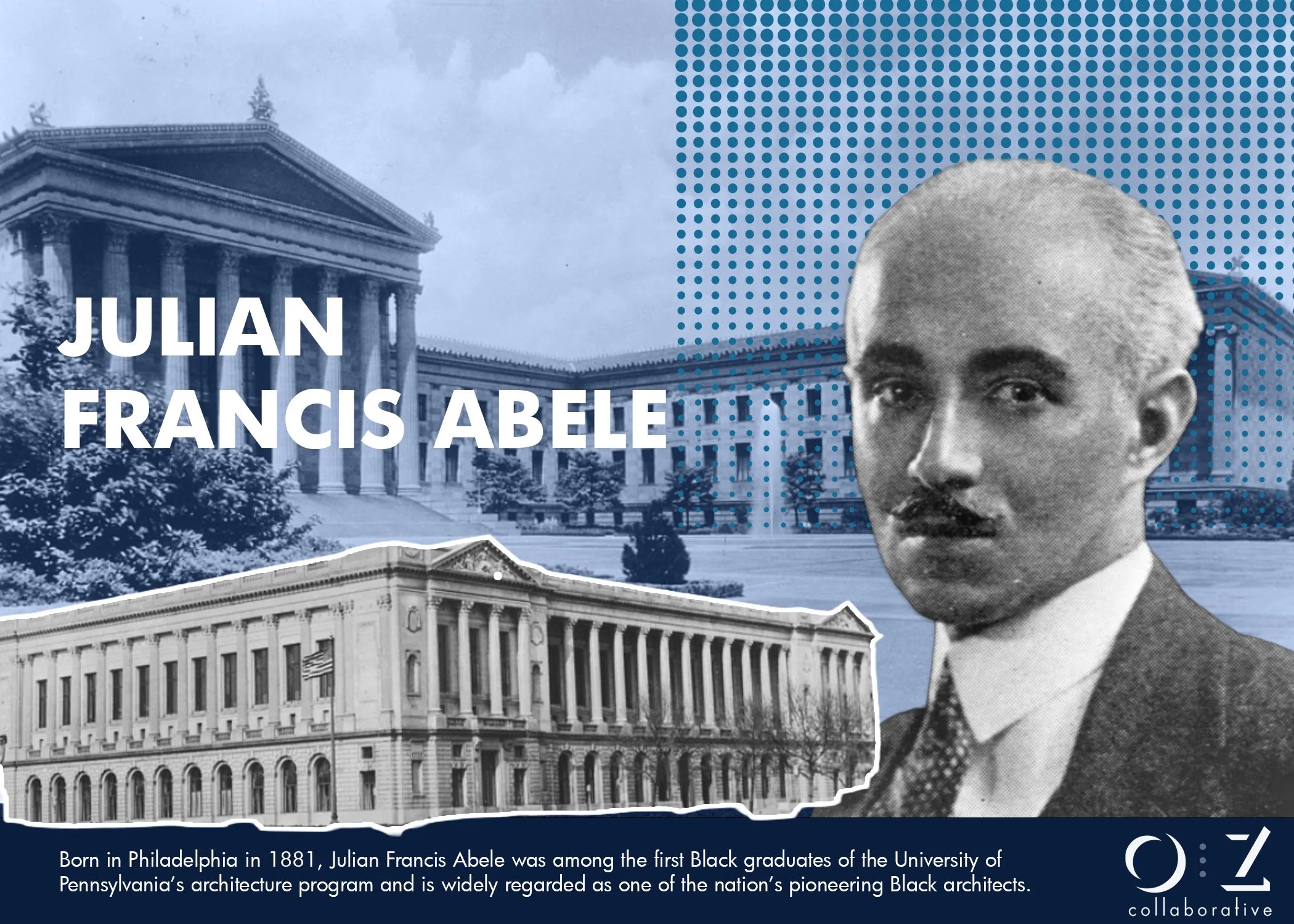
Portrait of Julian Francis Abele, architect of the Philadelphia Museum of Art.
Philadelphia’s architectural landscape tells a story of culture, resilience, and civic ambition. This Black History Month, we recognize the Black architects whose work helped shape the city’s neighborhoods, institutions, and public spaces. Their contributions are foundational to the way Philadelphia gathers, learns, worships, and remembers history.
Julian Francis Abele: Shaping Civic Philadelphia
Born in Philadelphia in 1881, Julian Francis Abele became one of the most influential architects of the early twentieth century. He was among the first black graduate of the University of Pennsylvania’s architecture program and later studied in Paris, refining a classical design approach that would define many landmark buildings.
As chief designer in the office of Horace Trumbauer, Abele played a central role in projects that shaped Philadelphia’s civic identity, including The Philadelphia Museum of Art, The Free Library of Philadelphia on the Parkway, and numerous institutional and cultural buildings throughout the region.
Beyond Philadelphia, Abele contributed significantly to the design of Duke University’s West Campus and Widener Memorial Library at Harvard University. Although his contributions were often uncredited during his lifetime, his architectural language remains embedded in the some of the nation’s most recognized civic spaces and landmarks, demonstrating how architecture defines public access and institutional permanence.
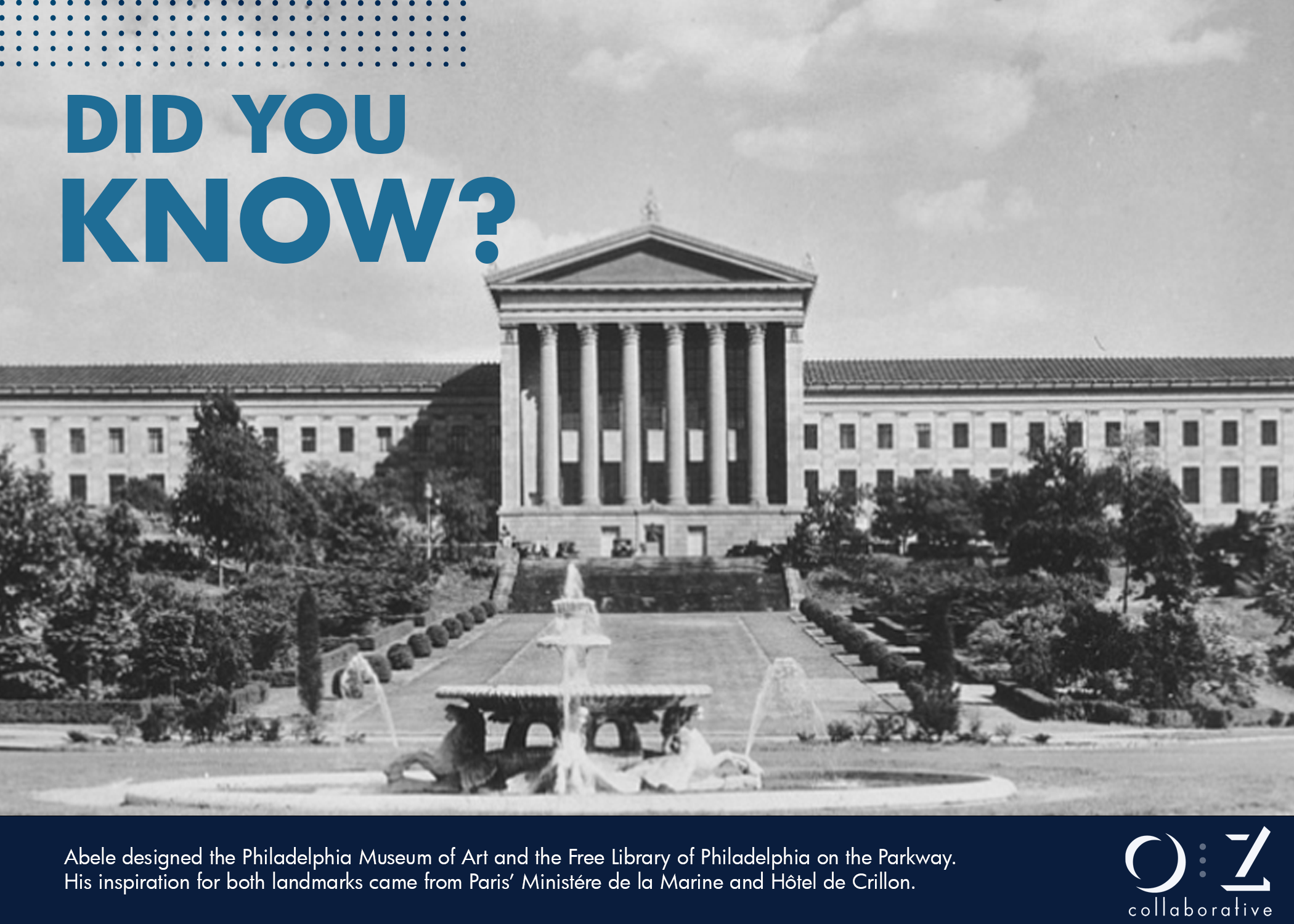
The Philadelphia Museum of Art.
Walter R. Livingston Jr.: Architecture and Civic Leadership
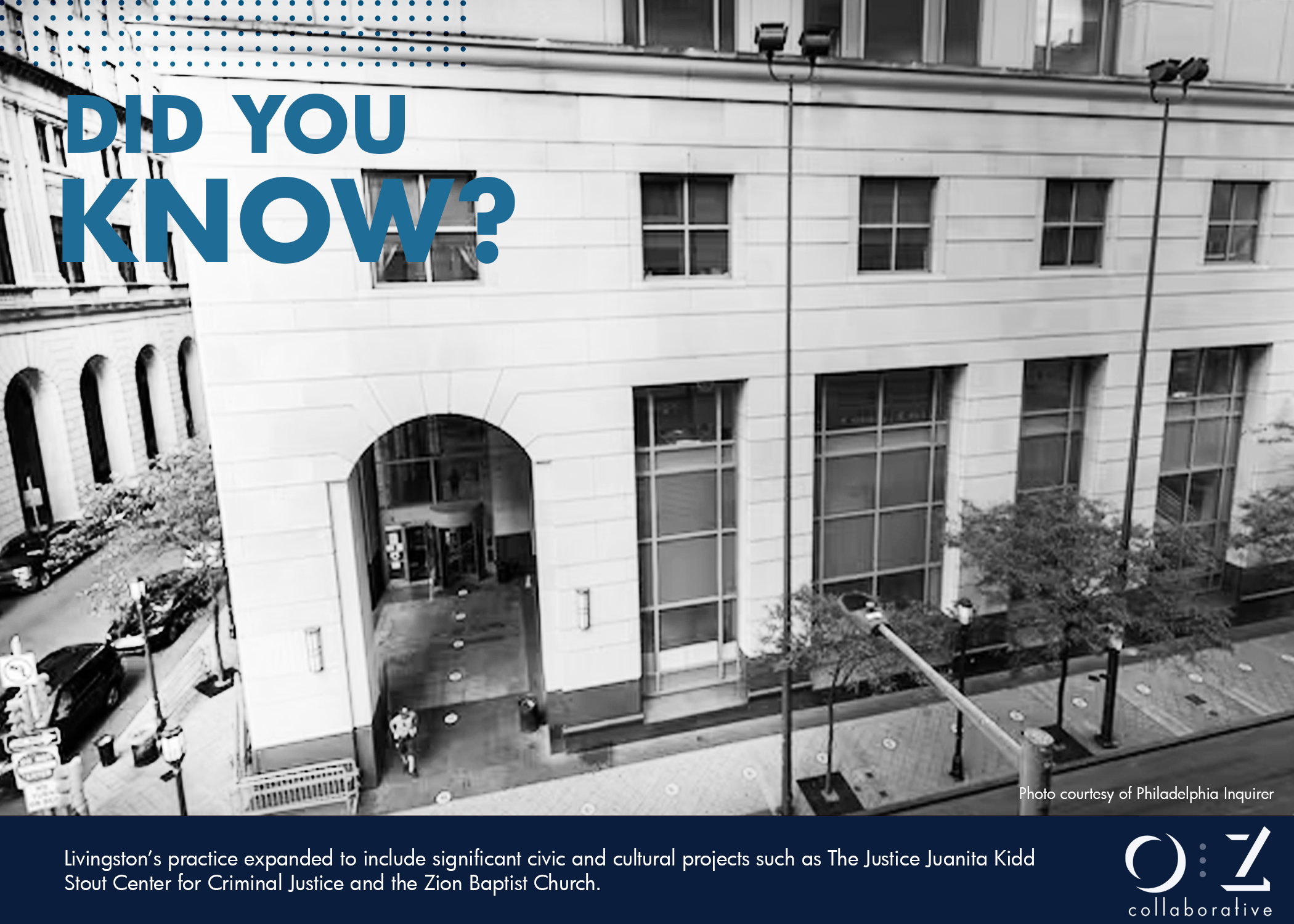
Walter R. Livingston Jr., born in 1922 in West Philadelphia, carried that legacy forward in a modern era. Livingston studied architecture and city planning at the University of Pennsylvania and became the first Black architect to design a school for the School District of Philadelphia with the completion of Samuel B. Huey Public School in 1961. His practice expanded to include significant civic and cultural projects such as the Juanita Kidd Stout Center for Criminal Justice, Zion Baptist Church, and Progress Plaza.
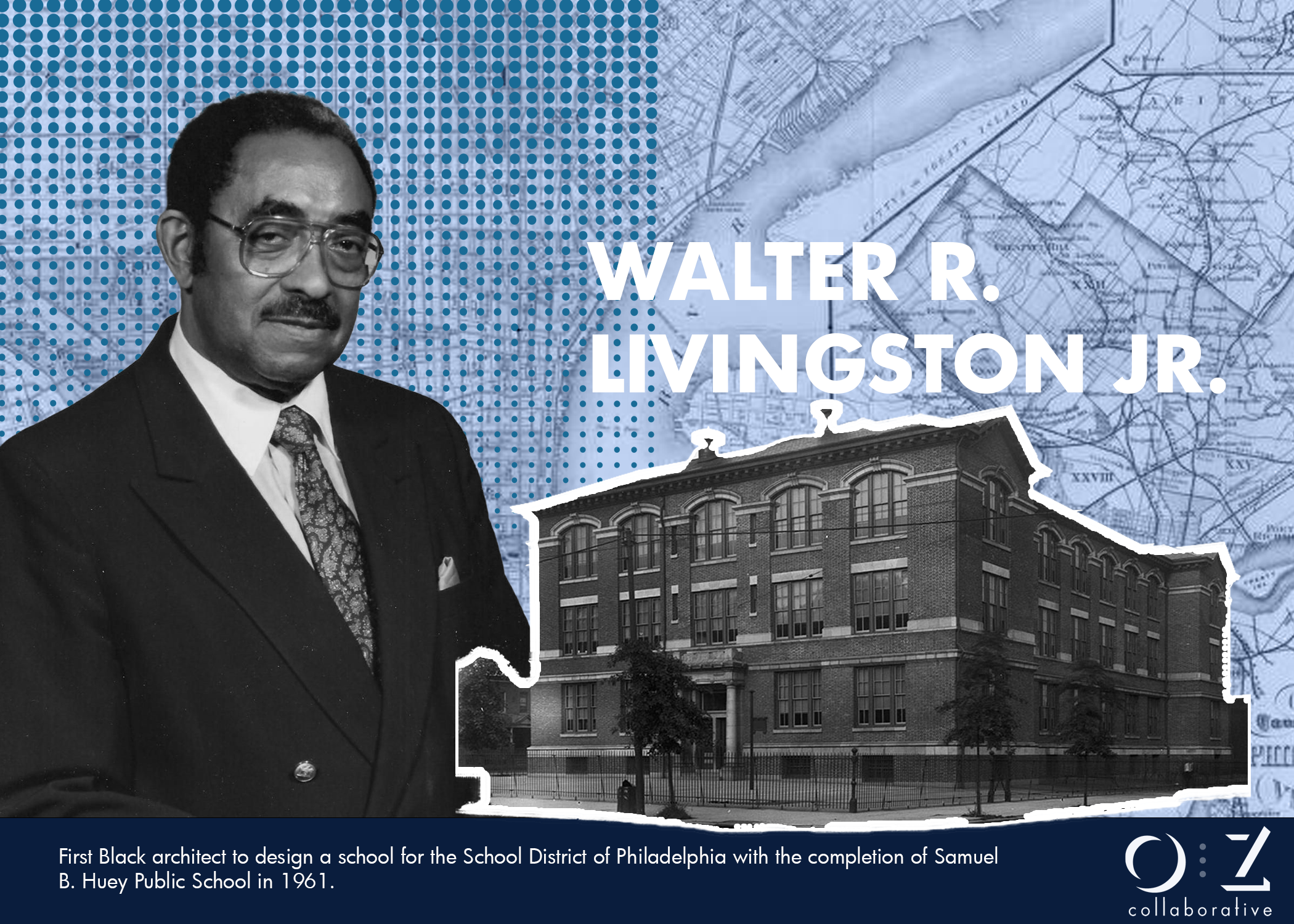
Portrait of Walter R. Livingston Jr., architect of the Samual B. Huey Public School.
Livingston’s impact extended beyond architectural design, illustrating how his career an intersect with advocacy and long-tern urban stewardship. He contributed to redevelopment and planning initiatives across Philadelphia, serving in leadership roles connected to housing, public space improvements, and community development efforts. He was also the first Black Philadelphian elevated to Fellowship within the American Institute of Architect’s (AIA) Philadelphia chapter.
Why Representation in Architecture Matters
The built environments shapes opportunity for its residents and visitors. Schools shape educational opportunities, libraries and museums support access to knowledge and history, and civic centers foster community. When architects from historically underrepresented communities participate in shaping these environments, the profession expands its understanding of a lived experience. Representation in architecture introduces broader cultural awareness, deeper sensitivity to neighborhood context, and a stronger connection between design decisions and community outcomes.
In cities like Philadelphia, where neighborhoods carry layered histories of migration, segregation, resilience and reinvestment, inclusive planning is essential. The presence of Black architects in leadership roles, both past and present, has helped shift conversations around access, public investment, and the stewardship of civic spaces.
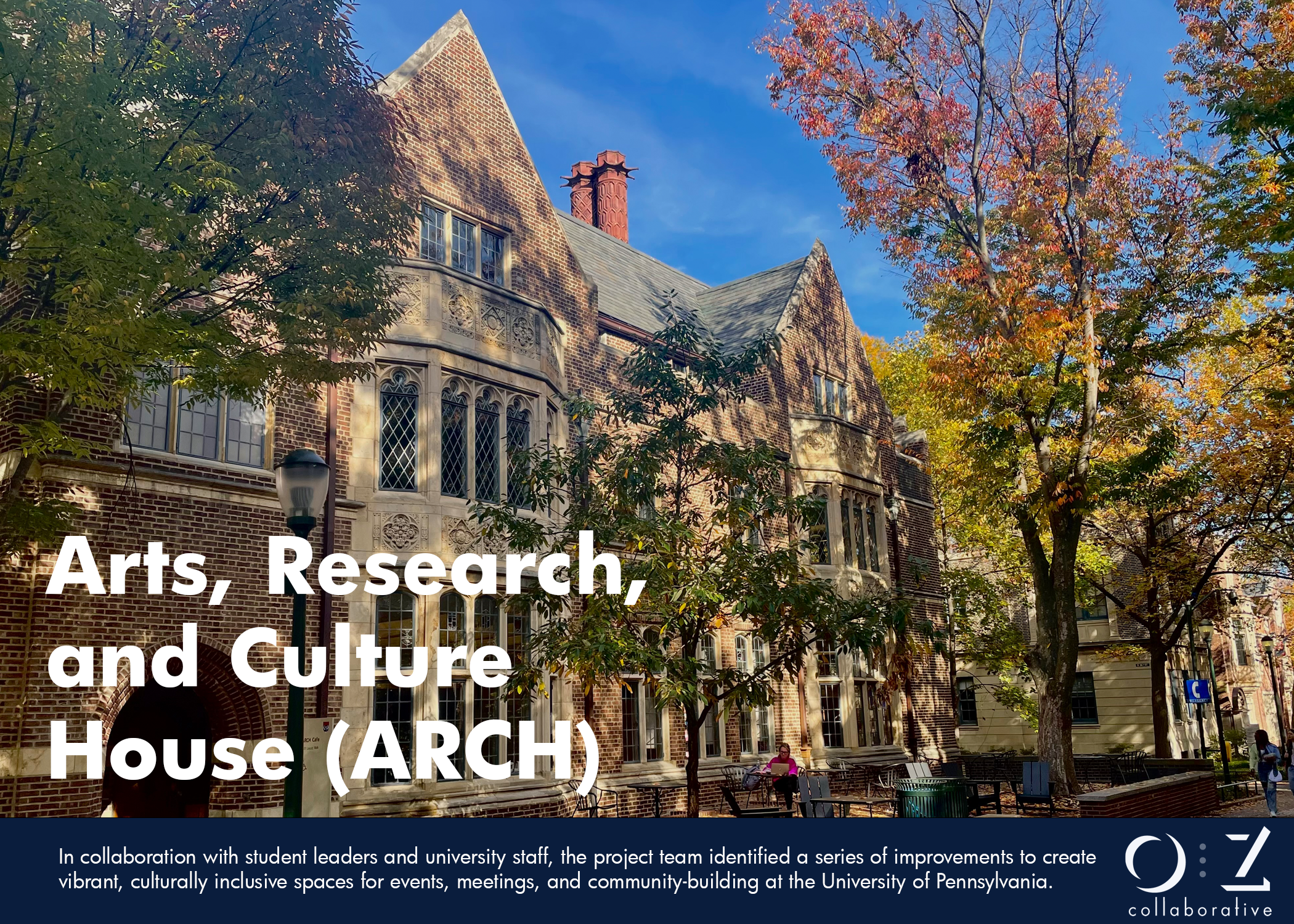
Art, Research, and Culture House (ARCH) at the University of Pennsylvania.
Historic preservation and adaptive reuse allow existing civic buildings to remain active contributors to neighborhood life. This approach extends the relevance of structures that carry cultural and community memory.
We approach architecture as an extension of place. Much of our work focuses on public schools, higher education, civic institutions, and the preservation of historic structures throughout Philadelphia. Through our preservation strategies, we aim to strengthen long-term neighborhood stability while respecting the foundations laid by earlier generations of architects.
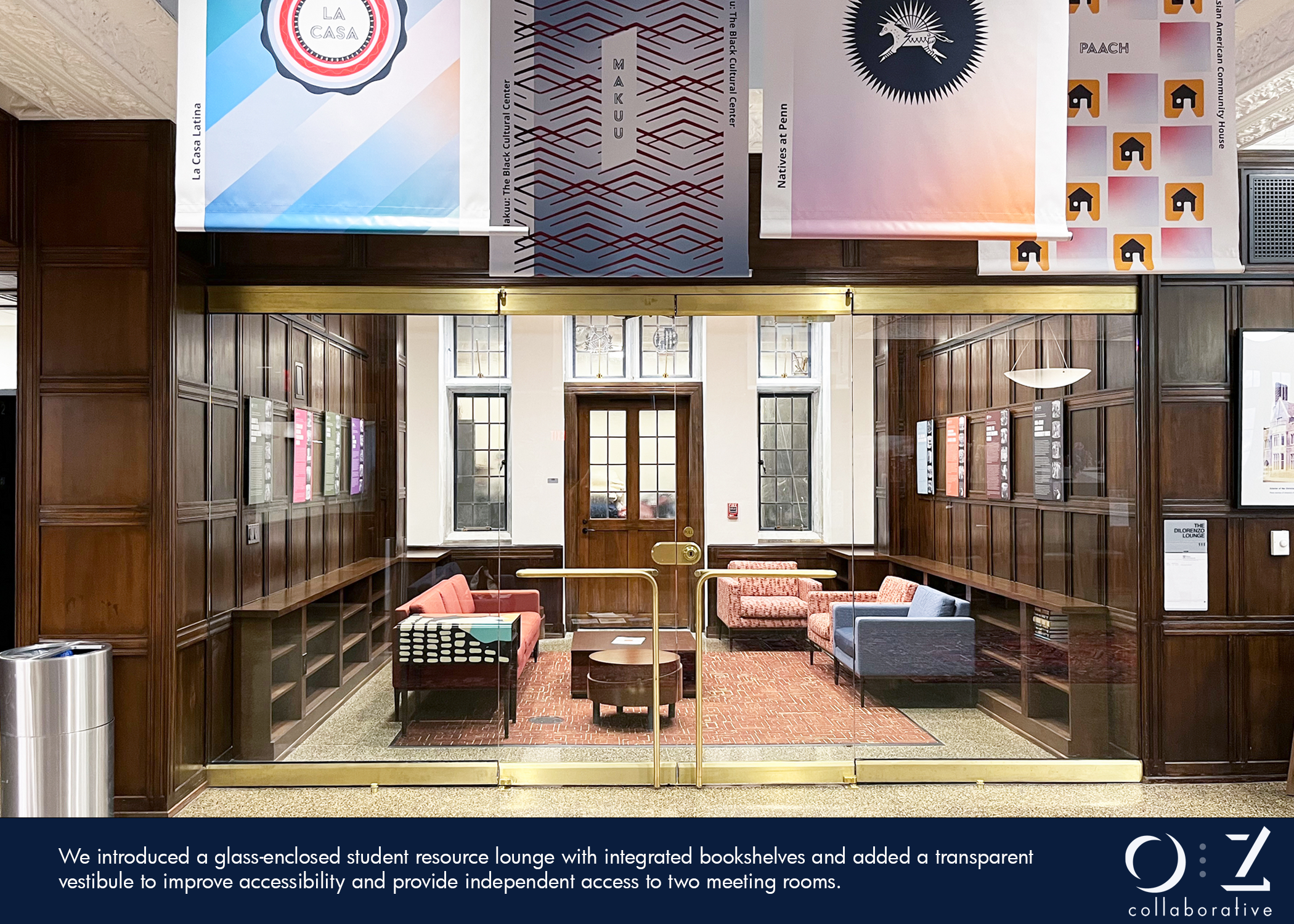
Glass-enclosed student resource lounge at the Art, Research, and Culture House (ARCH) in the University of Pennsylvania.
One example is our work on the University of Pennsylvania Arts, Research, and Culture House (ARCH) building, in the heart of University City’s campus. Our work focused on preserving the architectural character of the structure while modernizing interior systems and improving functionality for contemporary use. By carefully restoring historic elements and integrating updated building systems, the project honors the building’s legacy while ensuring it continues to serve future generations.
Learn more about our historic preservation projects.